Hello, curious explorers!
Imagine you’re building a castle out of LEGO blocks. Each block represents a part of your body and plays a specific role. What happens if you swap out a regular LEGO for a misshaped one? The structure might wobble, right? Something similar in our bodies can happen with the Extracellular Matrix or ECM.
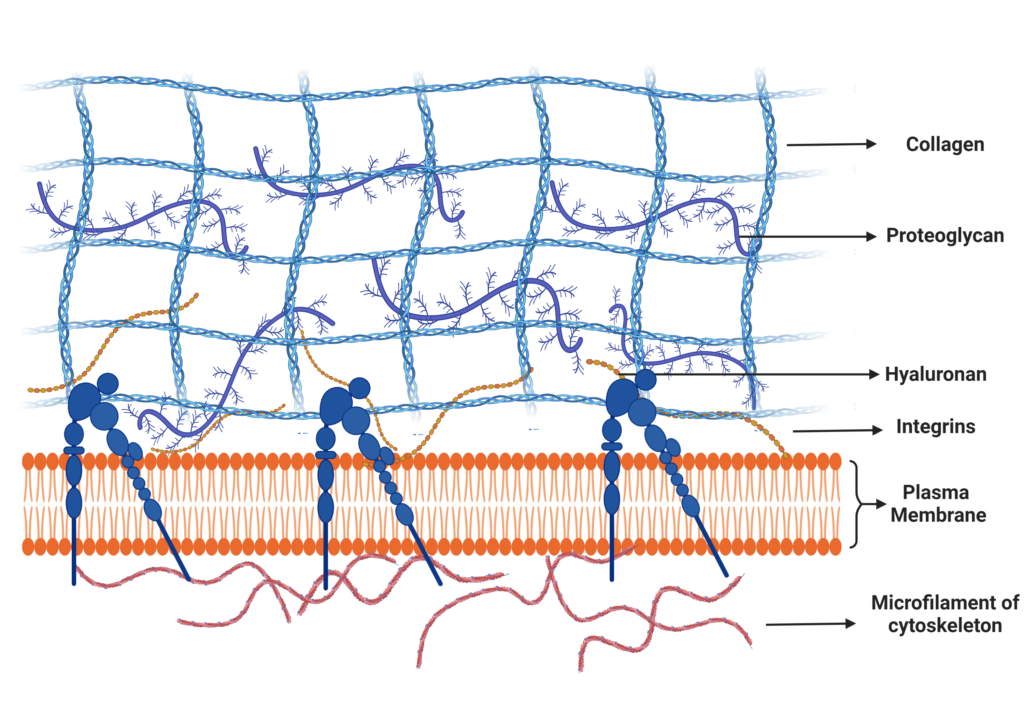
ECM is a network of proteins and carbohydrates. It acts as the glue that holds all our body’s cells together, giving shape to our organs and helping our tissues stretch and compress. It’s like a bustling city where our body’s cells live and work. Just like a constantly changing city, with new buildings replacing old ones, the ECM also changes to keep everything working smoothly.
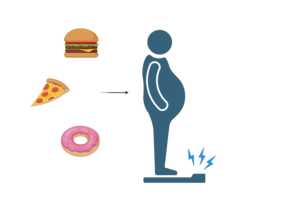
But here’s the twist – sometimes, the ECM changes in a way that isn’t so good for us, especially when someone is obese. These changes can lead to something called insulin resistance.
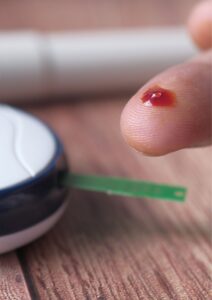
You can think of insulin as a key that unlocks our body’s cells to let sugar in, which the cells then use for energy. In insulin resistance, the cells can’t unlock properly, even when there’s plenty of insulin around. It’s as if the cells have forgotten how to use the key! This leads to too much sugar hanging out in our blood instead of getting into the cells where it’s needed.
Studies in mice (our tiny friends who often help us understand more about our bodies) have shown that overeating fatty food can cause changes in the ECM that lead to insulin resistance. This means the problem could start with the ECM when someone overeats fatty food and becomes obese.
So why does all this matter? Well, understanding how ECM changes can lead to insulin resistance might help scientists find new ways to stop this from happening. If we can figure out how to keep the ECM from unregulated remodelling, we might be able to stop or even reverse insulin resistance.
And that’s the end of our story today! It’s pretty cool how the ECM, something you might have never heard of, plays such a big part in our health. Remember, like a castle made of LEGO blocks, every part of our body plays an important role. We’ll explore more fascinating facts about our bodies in our next adventure.
Note: This blog is for learning and fun. It’s not meant to give medical advice. If you need medical advice, be sure to talk to a healthcare professional.